Fevers in Children
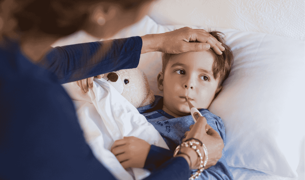
Fever in children is common and usually part of the body’s natural response to infection. Knowing when to monitor at home and when to seek medical care can help you respond with confidence.

In general, fever is a normal, healthy response of the immune system to an infection in the body. The height of the fever itself is no indicator of the severity of the infection and fever itself is an important part of the body’s fight against the infection. It is important to note that fever itself, less than 41.7 degrees is not dangerous and does not cause any brain damage or other problems whatsoever. Because fever is an indicator of infection, it is important for the doctor to figure out what is the CAUSE of the fever and what is the severity of the infection, but again fever is a symptom of a infection and not a problem in and of itself.
It is important to note that temperature fluctuates throughout the day. The average temperature is 36.5 in the morning and close to 37.5 in the evening/night. Fever until 38 degrees may be caused by exercise, excess layers of clothing or external heating such as baths, saunas, Jacuzzis etc.
While there remains a debate in the medical literature as to whether teething causing fever, if it does cause fever, it is low grade not rising above 38.5.
Most fevers are the result of viruses, which will cause body temperature to be between 38 and 40 degrees. The virus and its fever will usually go away within 2-5 days.
When does fever require immediate medical attention?
Infants under 3 months old with a fever exceeding 38 degrees must be examined promptly by a doctor or in a triage room.
In older children, a referral to a triage room or contacting a medical hotline is necessary if the fever rises above 41 degrees.
If a child appears very ill, it's crucial to see a doctor immediately, even if their fever is not very high.
Children with previous medical issues such as heart problems, respiratory issues, or chronic diseases should consult a doctor each time a fever occurs.
In relatively rare cases, fever may be accompanied by seizures, resembling convulsions in different body parts. These fever-related seizures are usually harmless by themselves, but if they occur for the first time, a treating physician should be consulted to rule out other causes.
Additionally, seeking a doctor's advice is crucial when fever is accompanied by one or more of the following symptoms:
- Stiffness in the neck and back.
- Fever accompanied by a rash - most rashes are not harmful, but a healthcare professional should assess to exclude dangerous conditions like meningitis.
- When the fever results from sunburn.
- The child has difficulty breathing.
- The child appears apathetic and unresponsive to the environment.
- The fever does not subside with pain relievers and lukewarm baths.
- The child has difficulty drinking or vomiting continuously.
- The child is unable to urinate..
Treating a fever
Fever by itself does not require treatment because it helps the immune system fight inflammation. However, if a child is irritable or uncomfortable due to the fever, it is advisable to take steps to reduce it.
Fluids and Body Temperature
In any case of fever, increasing fluid intake is essential. Also, try to remove layers of clothing to allow the body to cool down through the skin. Infants should not be bundled up when they have a fever, and for older children, a light blanket is sufficient.
OTC Medication
In pharmacies and supermarkets, various over-the-counter fever-reducing and pain-relieving medications are available. These medications, which do not require a prescription, can include ibuprofen-based drugs or paracetamol-based drugs, and come in syrup, tablets, or suppositories forms.
It is essential to note that infants under six months of age should not be given ibuprofen without a doctor's prescription.
It is crucial to follow dosage instructions strictly until receiving different guidance from a healthcare professional.
Suppositories are especially useful when dealing with children who refuse to take medicine orally, but it's important to remember not to split suppositories and sometimes to administer a lower dose than the recommended one due to the uniform size of suppositories.
Cold water, alcohol, or vinegar should not be used to reduce fever.
Is it necessary to give a child medication?
When it comes to children without underlying medical conditions, who are generally in good health, there is no need to administer fever-reducing medication if the fever is below 38.5 degrees Celsius.
If the fever rises above 38.5 degrees, it is advisable to start giving fever-reducing medication, which can be combined with lukewarm baths to help the body naturally lower the temperature.
If the fever is not very high but is accompanied by symptoms such as headaches, muscle aches, chills, irritability, or similar issues, treatment should be considered.
What about antibiotics?
In the body, infections have two main sources: viruses and bacteria. Viruses and bacteria are very different organisms, and their actions against our bodies are entirely separate. A virus usually affects the entire body and causes general discomfort (such as runny nose, cough, fatigue, and fever) without a specific focus. On the other hand, bacteria tend to concentrate in specific areas (resulting in a sore throat, earache, pain during urination, etc.).
Antibiotics are medications that work exclusively against bacteria. While most childhood illnesses are viral and usually resolve on their own within a few days, antibiotics do not affect them. Furthermore, using antibiotics without a proper diagnosis and prescription from a doctor is problematic and can lead to various issues.
Diagnosing the difference between a virus and a bacterial infection is done by a doctor through physical examination, medical history, and sometimes additional laboratory tests. If the answer is that indeed there is a bacterial infection in the body, the guidance will be to start antibiotic treatment. It's essential to emphasize completing the entire prescribed course of antibiotics, even if the symptoms of the disease have already subsided, to prevent their recurrence.
More about fevers in Infants and Children
Most fever-related illnesses are viral and typically last two to three days, although some may persist for up to a week. If your child has a bacterial infection and has been prescribed antibiotics by a doctor, improvement is usually noticeable within 48 hours.
Is high fever dangerous?
It's important to know that fever itself, if it is below 41.7 degrees Celsius, is not dangerous and does not cause harm. Since fever indicates an inflammatory process occurring in the body, it's essential to determine the severity of the inflammation and where it developed within the body.
How does fever manifest?
Fever manifests differently in every child. Some children may have a high fever but continue to behave normally, being active and cheerful, while others with a relatively low fever may react strongly to it. Typically, fever causes discomfort, and a child will exhibit symptoms such as sweating, shivering, headaches, muscle aches, loss of appetite, and irritability. Common symptoms of a feverish illness include earaches, sore throats, nausea, or diarrhea as reactions to the fever.
When a child has a fever, their heart rate and breathing rate will also increase. Children with fever tend to lose fluids, putting them at risk of dehydration.
What are fever convulsions?
As mentioned, in rare cases, children may develop fever-related seizures. These seizures can be frightening but are usually simple and not dangerous. Common signs of a simple fever-related seizure include:
- The entire body jerks, not just a specific body part.
- The seizure lasts no more than 15 seconds.
- The seizures do not recur within 24 hours.
The likelihood of fever convulsions is not related to the degree of fever but to the rapid rise and fall of temperature. Fever convulsions themselves are not dangerous, but informing the treating physician is essential to rule out other causes.
Online Consultation with a Pediatrician
Leumit offers an online consultation service . The service is available when medical centers are closed; during nights, weekends, and holidays, allowing you to consult with a pediatrician from the comfort of your home.